ITB and Residents of Ujung Berung Optimize Waste Management Through Maggot-Based Methods and Urban Farming
By Jekky - Teknik Pertambangan 2023
Editor Muhammad Efriza Pandia
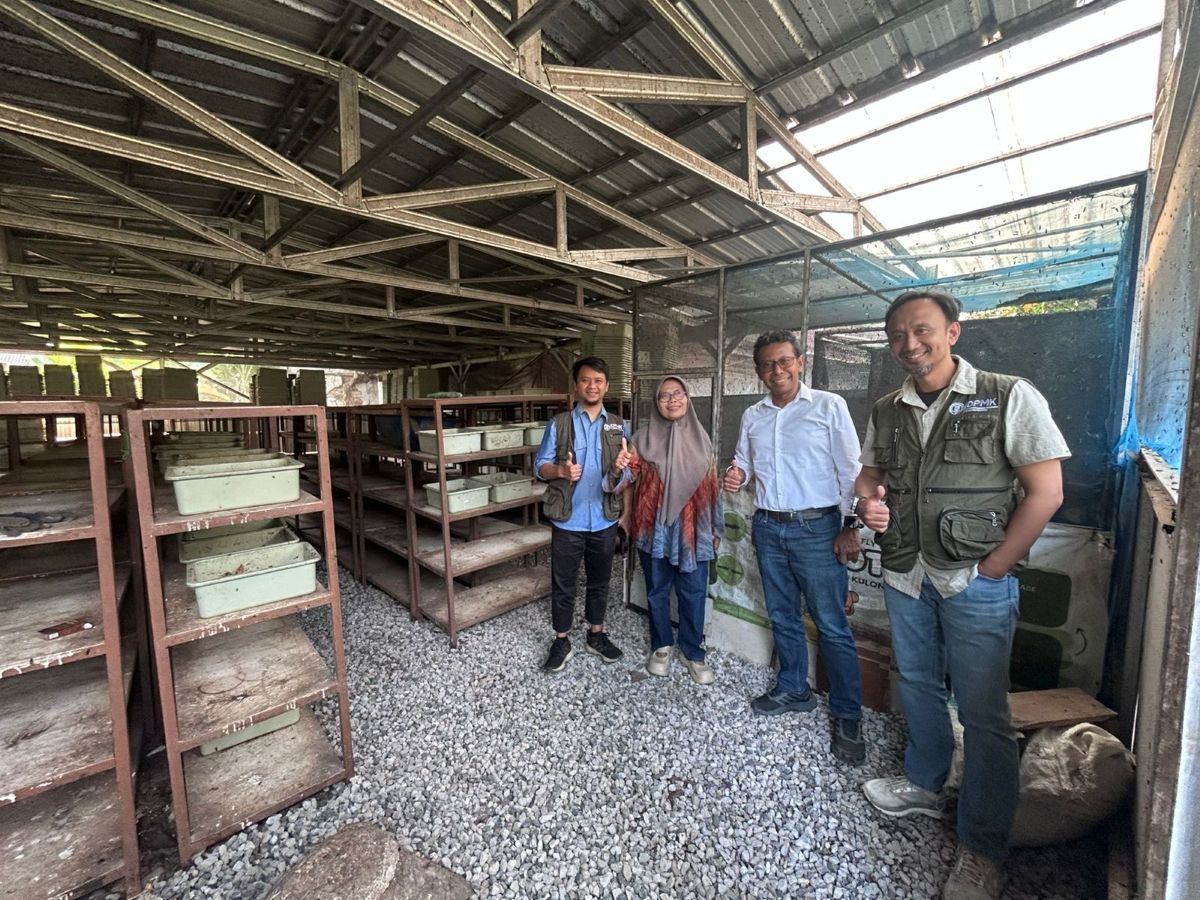
BANDUNG, itb.ac.id - A team from the School of Life Sciences and Technology (SITH) at ITB is helping to optimize community-based organic waste management facilities in Warung Kebon, Cipadung Kulon Village, Ujung Berung Subdistrict, Bandung City. One of the faculty members involved, Prof. Ir. Ramadhani Eka Putra, S.Si., M.Si., Ph.D., explained that this facility had actually been in place before ITB became involved.
It All Started with the Pandemic, Refined by ITB
This waste management initiative began during the COVID-19 pandemic, when ITB was implementing a community service program focused on “economic recovery.” The location happened to be near Prof. Rama’s home. At that time, Hani, as the initiator and landowner, established a garden to process organic waste in the surrounding area, while also addressing the overwhelming waste problem in the Gedebage area at the time.
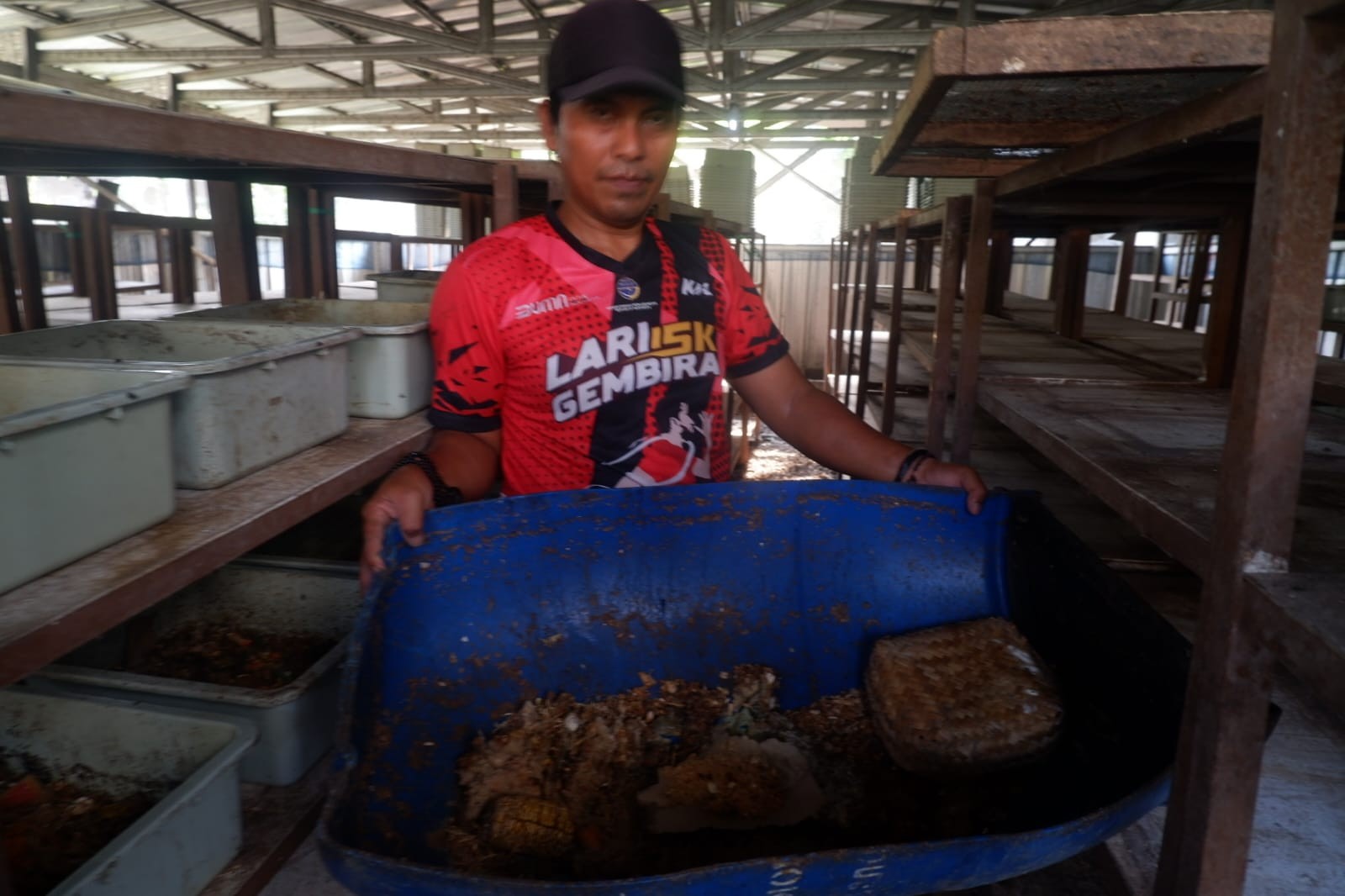
“When I went there, I was recognized by other waste management activists and asked to help determine whether the area had the potential to increase its waste processing capacity,” said Prof. Rama. At that time, the only facility available was a simple composting system using barrels buried in the ground, which had been protested by residents because it emitted an unpleasant odor.
Hani, as the chairperson of the local community self-help group, recalled that this site was initially chosen because it was quite spacious and underutilized, so she took the initiative to put it to use to benefit the surrounding community. “Since it was first established, about 650 residents have participated in sorting organic and inorganic waste,” said Hani.
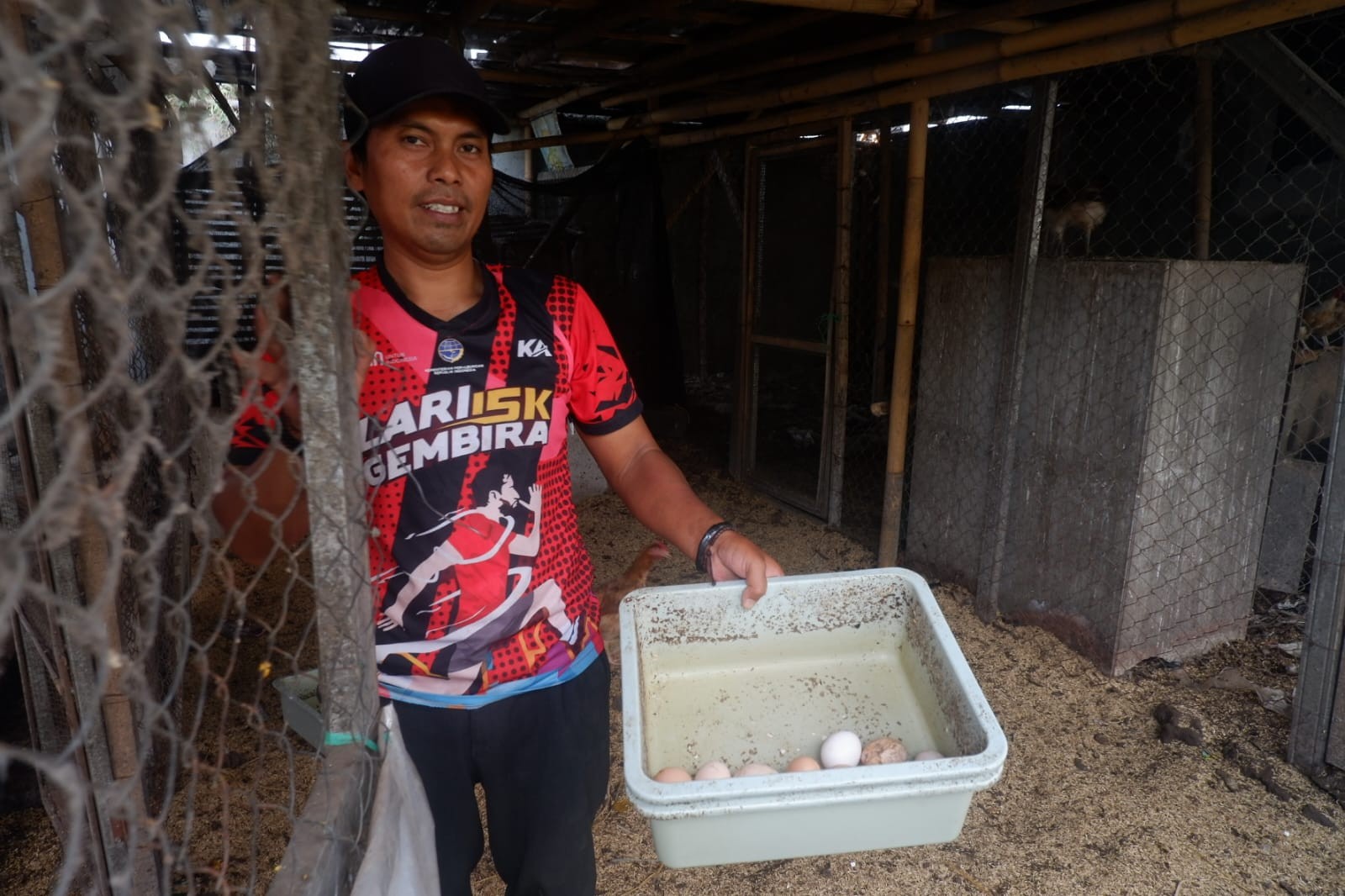
The ITB SITH team then introduced Black Soldier Fly (BSF) technology and a planting bucket system to address odor issues and improve processing productivity. In addition, a chicken coop housing 60 chicks was built as a first step, similar to the “chicken apartment” concept also being developed at other locations. The BSF facility initially had a capacity of only 50 trays, before receiving an additional 200 trays in 2024–2025 through assistance from the Bandung City Environmental Agency (DLH), an initiative spearheaded by ITB.
From Broiler Chickens to Laying Hens, and On to Scientific Research
One of the main contributions of the ITB SITH team was optimizing the chicken farming program, shifting it from broiler chickens to laying hens. The chicken population, which was originally 60 birds, has now increased to 100. The ITB SITH team also involved students in research on the use of maggot castings as organic fertilizer, which was later published in the PRIMA scientific journal. “This also served as the starting point for people to learn about maggot castings; there is scientific evidence regarding the dosage and its effects,” explained Prof. Rama.
Ma’ruf, a sanitation and poultry farm worker at the site, explained how the combination of maggots and chickens helps manage smelly organic waste in the surrounding environment during daily operations. “We immediately feed smelly waste to the maggots, and usually the smell disappears within a day. If the food scraps are still in good condition like rice mixed with eggs or chicken—we feed them to the chickens,” he explained. He added that education on household waste sorting still needs to be continuously promoted so that the waste arriving at the site is already in a condition ready for processing.
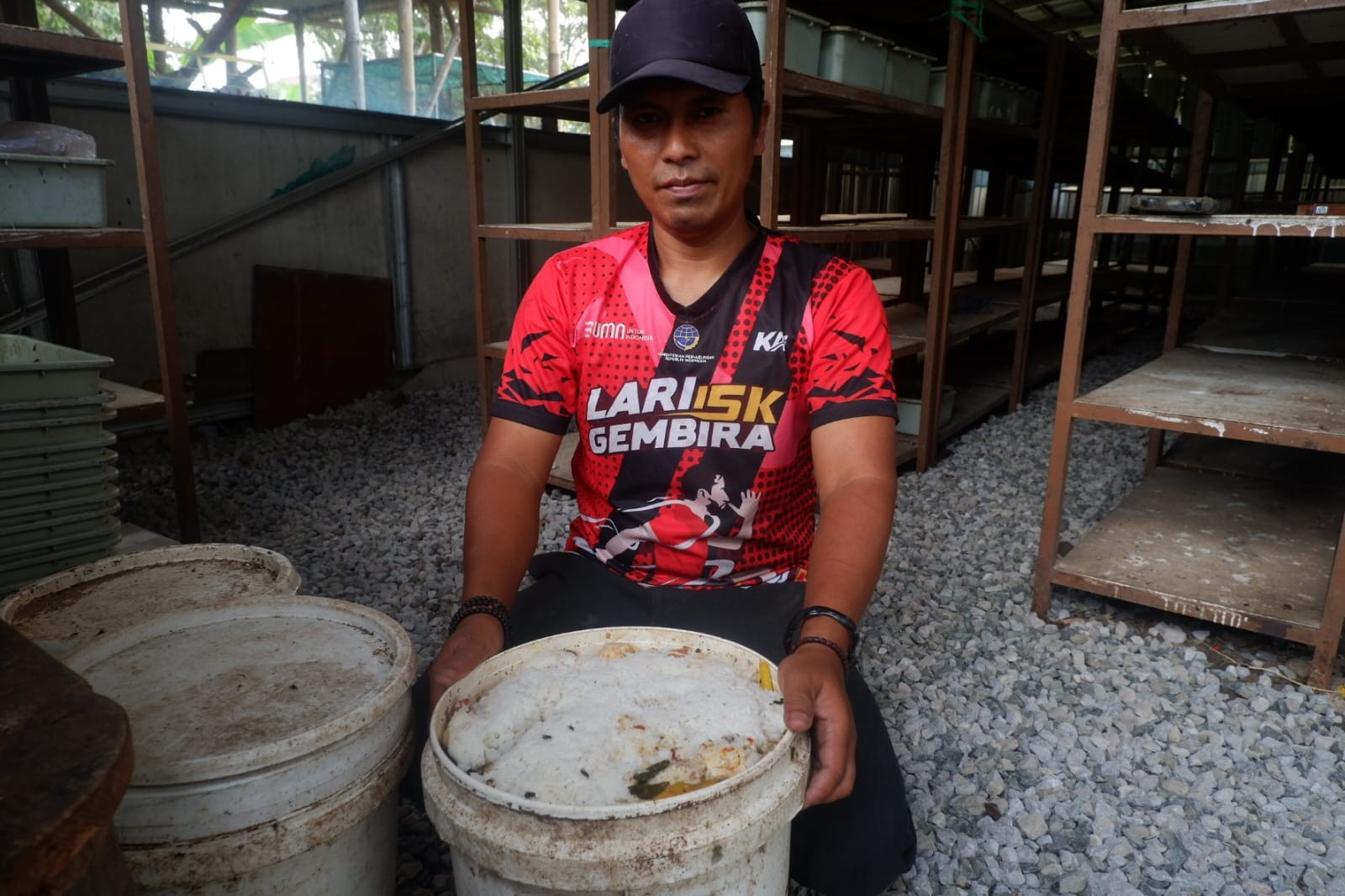
In addition to research, the ITB SITH team has also introduced a more structured waste tracking system. Hani’s statement regarding her group’s ability to process up to 120 kilograms of waste per day has been verified through calculations conducted by the team. According to Prof. Rama, the site’s capacity could actually handle waste equivalent to 4–5 RWs, but it is currently limited to serving only 2 RWs due to resistance from local residents who object to waste coming from outside the area, as well as odor and noise disturbances from chickens and ducks before they are properly housed. This situation indicates that the site’s actual processing capacity is still far from its maximum limit and has the potential to be expanded if these social challenges can be overcome.
The Emergence of Innovation and Its Replication in Other Regions
This collaboration has also led to a number of innovations, including a patent for organic fertilizer made from chicken manure and a new bucket design that is now used in several other chicken coops in Bandung. The model at Warung Kebon even served as the inspiration for a similar program in South Jakarta.
The program’s success has drawn the attention of the Bandung City Environmental Agency and prompted a visit from the Mayor of Bandung. Hani herself is now frequently invited as a trainer to share her experience with community-based waste management, and she hopes this site will continue to evolve into an inspiring environmental education hub that influences other urban waste management initiatives. A number of schools and companies have also organized study visits to the site, which will eventually be landscaped to resemble a park so that waste management activities no longer evoke feelings of disgust.
As a development initiative, the ITB team is currently replicating a similar model in the Citarum area, which faces a comparable situation involving abandoned parks and schools. Future plans also include refining standardized anaerobic composting technology, exploring new decomposer species such as earthworms, Hong Kong caterpillars, and crickets, and transforming the site’s image into a sort of “oasis” in the middle of a residential area. The ITB FMIPA team is also involved in management aspects, including designing an organic waste bank system with a fair fee structure based on the amount of waste residents deposit, which is currently being developed in collaboration with undergraduate students.
Ongoing Support from ITB’s DPMK
The Director of ITB’s Directorate of Community Service and Expertise Services (DPMK), Prof. Dr.-Ing. Zulfiadi Zulhan, S.T., M.T., IPM, explained that waste management is one of the main focuses of ITB’s community service programs this year, with approximately ten waste-related programs having received funding support from DPMK, including this program in Cipadung Kulon. “The model we are pursuing involves sorting waste at the source, then utilizing organic waste to produce maggots, compost, or for urban farming, while other sorted waste can be sold and monetized,” said Prof. Zulfiadi. He emphasized that DPMK will continue to promote the expansion of such community-based waste management innovations to other areas in the city of Bandung.
Through collaboration between ITB faculty and community initiatives in Cipadung Kulon, organic waste—which was previously a source of complaints has now been transformed into a source of food, scientific research, and inspiration for similar programs in various regions. This model underscores that waste management issues can be optimally resolved when community initiatives are combined with appropriate scientific and technological support.
Reporter: Jekky, Mining Engineering 2023
.jpg)
.jpg)
.jpg)
.jpg)
.jpg)


.jpg)